Get 10% off your first order! CODE: FIRSTORDER10



Calcium Alpha-Ketoglutarate (CaAKG)
What is CaAKG and why is the fitness world obsessed? We dive into the science of Calcium Alpha-Ketoglutarate, exploring its role in collagen production and cellular health. Fuel your gains and your future at Muscle Munchies.
PROTEIN BALLS 101
1/26/20263 min read
What is Calcium Alpha-Ketoglutarate (CaAKG)?
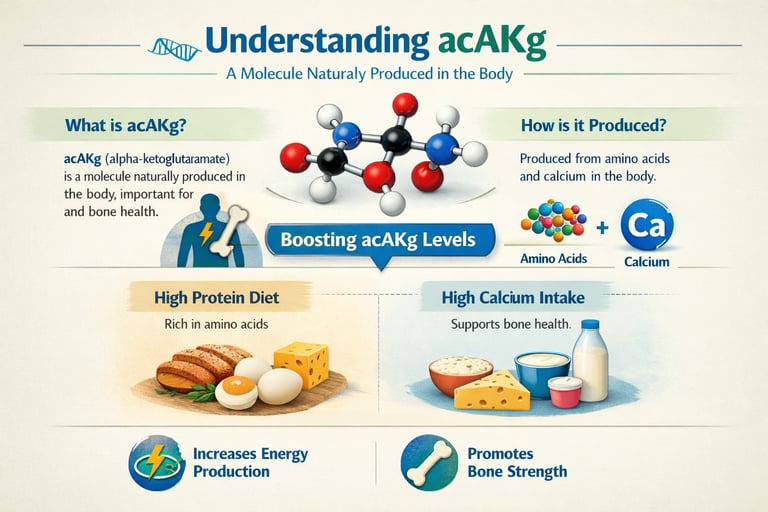
At its core, Calcium Alpha-Ketoglutarate (CaAKG) is a stable form of a naturally occurring molecule in your body called Alpha-Ketoglutarate (AKG).
If you remember the "Krebs Cycle" from high school biology, AKG is a key player in how your cells create energy. However, as we age—usually starting around age 40—our natural levels of AKG begin to drop significantly. By the time we hit 80, we often have only 10% of what we started with.
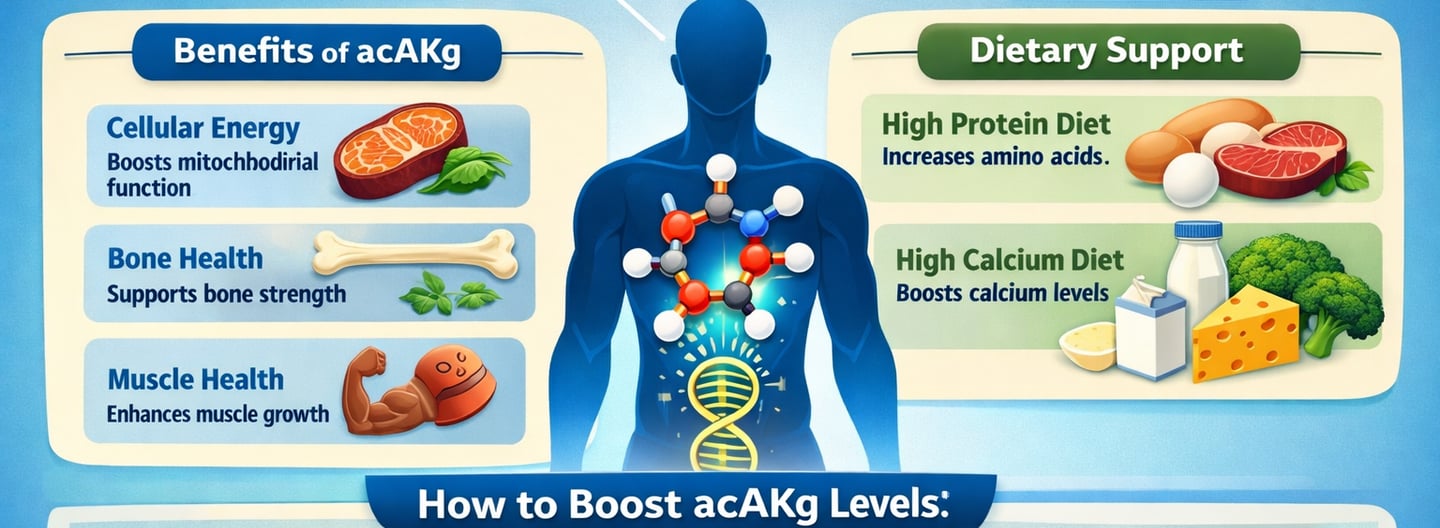
The Bottom Line: It’s a specialized supplement designed to refill your metabolic tank, helping you perform like a younger version of yourself while protecting your hard-earned muscle mass.
Portion guidance (simple approach)
Start with one serving as a snack, then adjust based on:
how close your next meal is
whether it’s a training day
your hunger level (real hunger, not just boredom)
Related Reading 📚
[The Golden Window]: Why eating Muscle Munchies Protein Balls 30–60 minutes post-workout is the secret to locking in your gains.
[NMN vs. CaAKG]: A breakdown of the two biggest heavyweights in the longevity world and which one belongs in your stack.
[Metabolic Fueling]: How optimizing your cellular energy leads to faster recovery and more explosive strength.
FAQ: Everything You Need to Know
How does CaAKG differ from regular AKG? The added calcium makes the molecule more stable and provides a "slow-release" effect, ensuring better absorption than standard AKG or AAKG.
When should I take it? Take it 30–60 minutes before your workout for an energy boost, or daily at a consistent time for longevity and recovery benefits.
Are there any side effects? It is generally very safe. Just stick to the recommended dose (500mg–1,000mg) to avoid excessive calcium intake.
Can I get it from food? Technically yes (in trace amounts in meat and veggies), but you’d need to eat an impossible amount to see the performance benefits. Supplementation is key.
Does it work with my Protein Balls? Yes! CaAKG helps your body process protein more efficiently, making your Muscle Munchies snacks even more effective for muscle repair.
Think of CaAKG as a metabolic middleman. It’s not just a random mineral; it’s a bridge between the food you eat and the energy your muscles use. By attaching the AKG molecule to Calcium, it becomes more stable and easier for your body to absorb, ensuring it doesn't get broken down before it can do its job.
In the context of your fitness journey, CaAKG serves three primary roles:
Energy Catalyst: It helps your mitochondria (the powerhouses of your cells) churn out ATP more efficiently.
Nitrogen Scavenger: It helps manage nitrogen levels in the body, which is crucial for preventing muscle breakdown.
Longevity Support: Beyond the gym, it’s being hailed as a "longevity molecule" for its ability to reduce biological age by supporting DNA repair.
The "Muscle Munchies" Breakdown
The Gains Game: CaAKG for Muscle Growth & Recovery
If you’re chasing a PR or just trying to stay lean, protein is your foundation. But even the best protein needs a "project manager" to make sure those amino acids actually reach your muscle fibers. That is exactly where CaAKG steps in.
1. Boosting Protein Synthesis
CaAKG isn't just about energy; it’s a powerful signaling molecule. It helps trigger the pathways responsible for muscle protein synthesis. By maintaining higher levels of AKG in your system, you're essentially keeping the "construction crew" on the clock longer, helping you build lean mass more effectively after a tough session.
2. Preventing Muscle Breakdown (Anti-Catabolism)
Nothing kills progress like catabolism—when your body starts eating its own muscle for fuel. CaAKG acts as a nitrogen reservoir. By keeping nitrogen levels balanced, it tells your body to use stored fat or incoming nutrients for energy instead of breaking down your hard-earned biceps.
3. Faster Turnaround Times
The "calcium" part of CaAKG isn't just for show. Calcium is vital for muscle contractions, while the AKG helps clear out metabolic waste (like ammonia) that builds up during high-intensity training. This combo means less soreness the next day and a faster return to the squat rack.
Muscle Munchies Protein Balls
Healthy snacks for active lifestyles and fitness.
Contact
+66897246744
© 2026. All rights reserved.
76/9 M.6 T.Chanlong A.Muang, Phuket, Thailand 83130